Lithium-Ion vs Lead-Acid Solar Batteries
Introduction
Solar systems are becoming a smart investment for homes and businesses across Pakistan — from Karachi to Peshawar. But choosing the right battery is just as important as choosing the right solar panels. The two most common types used today are lithium-ion and lead-acid solar batteries.
Both store solar energy efficiently, but they differ in cost, lifespan, and performance. Let’s compare them in detail so you can decide which one suits your energy needs.
What Is a Lead-Acid Solar Battery?
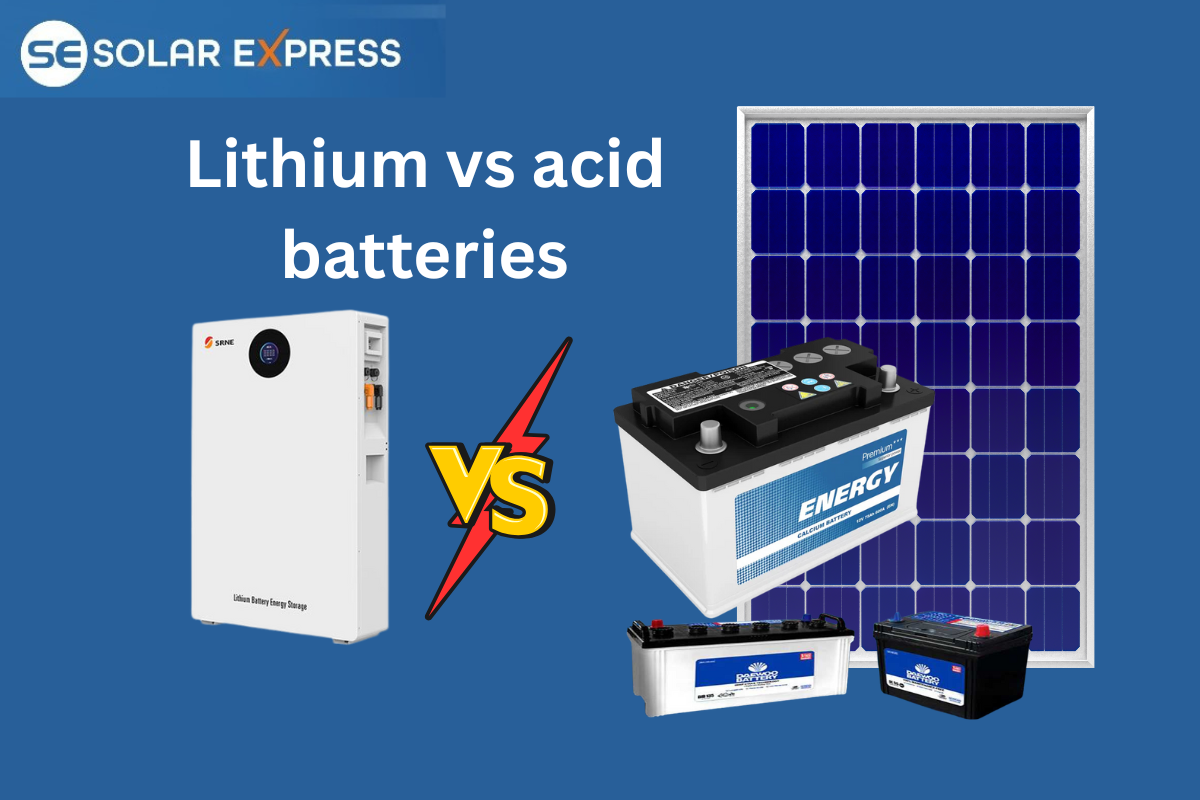
Lead-acid batteries are the oldest type of rechargeable battery technology and are still widely used in Pakistan. They come in several forms such as flooded, AGM, and gel types.
Advantages:
-
Affordable upfront cost — ideal for small homes or short-term solar setups.
-
Easily available — you can find them in almost every battery shop in Pakistan.
-
Simple installation — works with most inverters and controllers.
Disadvantages:
-
Shorter lifespan — usually 2 to 4 years.
-
Heavy and bulky — difficult to move or maintain.
-
Lower efficiency — energy losses are higher compared to lithium batteries.
-
Requires maintenance — some types need regular water refilling.
What Is a Lithium-Ion Solar Battery?
Lithium-ion batteries are newer and use advanced technology found in electric vehicles and smartphones. In solar systems, they’re becoming the premium choice because of their long life and high efficiency.
Advantages:
-
Longer lifespan — lasts 8 to 12 years on average.
-
Higher efficiency — stores and delivers more of the solar energy you produce.
-
Lightweight & compact — easy to install even in small spaces.
-
Low maintenance — no water refilling or corrosion issues.
-
Fast charging — recharges quickly from solar panels.
Disadvantages:
-
Higher upfront cost — can be 2–3 times more expensive than lead-acid.
-
Temperature sensitivity — works best in moderate climates.
Detailed Comparison: Lithium-Ion vs Lead-Acid
| Feature | Lithium-Ion Battery | Lead-Acid Battery |
|---|---|---|
| Cycle Life | 4000–6000 cycles | 500–1000 cycles |
| Depth of Discharge (DoD) | 80–90% | 50–60% |
| Efficiency | 95% | 80–85% |
| Weight | Lightweight | Heavy |
| Maintenance | Maintenance-free | Requires regular check |
| Lifespan | 8–12 years | 2–4 years |
| Initial Cost | High | Low |
| Long-Term Cost | Cheaper over time | Expensive due to replacement |
| Best For | Long-term solar systems | Short-term or budget setups |
Which Battery Is Better for Your Solar System?
If you want a budget-friendly solution and don’t mind occasional maintenance, lead-acid batteries are still a practical choice for small homes or shops.
However, if you’re looking for long-term reliability, faster charging, and higher energy efficiency, lithium-ion batteries clearly win the comparison.
In Pakistan’s hot weather, lithium batteries also perform better due to their smart BMS (Battery Management System) that protects them from overcharging and heat damage.
Expert Tip for Pakistani Users
For a 5 kW solar setup, one high-quality lithium-ion battery (10 kWh) can power most home appliances overnight. Although it costs more upfront, it saves you from frequent replacements and maintenance making it a cost-effective investment over 8–10 years.
Conclusion
When comparing lithium-ion vs lead-acid solar batteries, the choice depends on your budget and energy goals.
-
Choose lead-acid if you want the cheapest starting cost.
-
Choose lithium-ion if you prefer long life, higher performance, and peace of mind.
In short, lithium-ion batteries are the future of solar energy storage especially as their prices continue to drop in the Pakistani market.
Related Articles