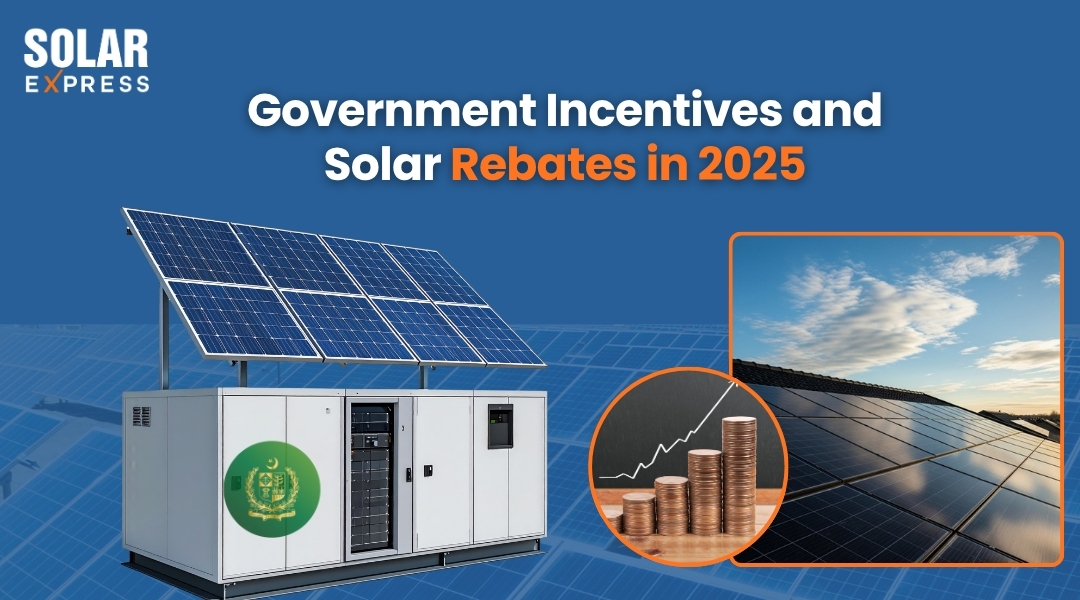
Government Incentives and Solar Rebates in 2025
In 2025, solar energy is no longer just a futuristic concept; it has become an essential part of sustainable living and energy management, especially in countries like Pakistan where electricity prices continue to rise. Installing a solar system can significantly reduce your monthly energy bills, increase energy independence, and contribute to a cleaner environment. However, the initial investment in solar panels, inverters, and batteries can be high for many homeowners and businesses. This is where government incentives and solar rebates come into play, making solar energy more accessible and financially attractive.
Why Government Incentives Matter
Governments around the world are increasingly promoting renewable energy through subsidies, rebates, and incentives. In Pakistan, these measures aim to:
-
Reduce dependency on fossil fuels.
-
Encourage sustainable energy adoption.
-
Make solar energy affordable for middle-class families and small businesses.
-
Promote energy security and environmental sustainability.
Without these incentives, the upfront cost of installing a solar system can discourage potential users. Fortunately, the government has implemented several programs to reduce the financial burden, ensuring that solar investment is both practical and profitable in the long term.
Key Solar Incentives in 2025
-
Net Metering Policies
While net metering is one of the most talked-about solar policies, it allows homeowners and businesses to sell excess electricity generated by their solar system back to the grid. In 2025, new regulations make net metering easier to access, faster to approve, and more profitable for users. This means that if your solar system produces more electricity than you consume, the utility company credits you for the surplus energy, further reducing your electricity bills. -
Capital Subsidies and Rebates
The government has introduced capital subsidies for residential and commercial solar installations. These subsidies cover a percentage of the total system cost, which can significantly lower the upfront payment required. For example, a 5kW solar system that might cost PKR 700,000 could receive a subsidy of 10–20%, depending on the program and eligibility. Such rebates make solar more affordable and accelerate the return on investment. -
Tax Incentives
Businesses and industries investing in solar can benefit from tax deductions and exemptions. In 2025, certain solar equipment purchases are eligible for reduced import duties and tax breaks, helping companies reduce operational costs. Tax benefits are particularly advantageous for medium to large businesses looking to cut energy costs and improve sustainability credentials. -
Soft Loans and Financing Options
The government, in collaboration with banks and financial institutions, provides low-interest or interest-free loans for solar projects. This makes it possible for homeowners and businesses to invest in high-quality solar systems without worrying about immediate full payment. Soft loans are typically repaid over several years, allowing the savings from reduced electricity bills to offset monthly loan payments. -
Special Programs for Rural Areas
Rural electrification remains a challenge in many parts of Pakistan. To address this, the government has launched rural solar programs that provide financial assistance and technical support for off-grid solar installations. These programs help communities gain access to electricity while promoting clean energy adoption.
Benefits of Government Incentives
Government incentives and rebates make solar energy more than just an environmentally responsible choice—they turn it into a financially smart decision. Here’s how:
-
Lower Initial Costs: Subsidies reduce the upfront expense, making solar affordable even for middle-income households.
-
Faster ROI: Reduced costs and the ability to sell excess electricity mean your system pays for itself more quickly.
-
Energy Security: Solar reduces dependence on the grid, protecting you from power outages and rising tariffs.
-
Environmental Impact: Incentivizing solar helps lower carbon emissions, contributing to climate change mitigation.
-
Encouragement for Businesses: Tax incentives and rebates motivate industries to adopt renewable energy, lowering operating costs and increasing profitability.
Eligibility Criteria
While government incentives are highly beneficial, eligibility requirements may vary:
-
Residential Incentives: Homeowners may need to provide proof of property ownership, electricity bills, and technical specifications of the solar system.
-
Commercial Incentives: Businesses must submit energy consumption records, company registration documents, and project plans for approval.
-
Compliance: All solar equipment must meet government-approved standards to qualify for subsidies or tax benefits.
It is important to consult with a certified solar provider to ensure your system meets all criteria for maximum financial support.
How to Apply for Solar Rebates and Incentives
-
Research Government Programs: Visit official websites or contact relevant energy departments to understand available incentives.
-
Consult with Solar Companies: Reputable solar providers often guide you through the application process and ensure your system qualifies.
-
Submit Required Documentation: Ensure that all property, electricity, and system documents are correctly submitted.
-
Inspection and Approval: Government authorities may inspect your site to verify the installation.
-
Receive Rebates and Credits: Once approved, subsidies are applied, tax benefits are granted, or rebates are processed.
Tips for Maximizing Incentives
-
Choose Quality Equipment: Government incentives often require certified solar panels and inverters. Avoid low-quality equipment that may disqualify you.
-
Plan System Size Carefully: Accurate load calculation ensures you qualify for the correct rebate and optimize electricity savings.
-
Stay Updated: Solar policies and incentives are updated frequently; staying informed ensures you never miss new benefits.
-
Leverage Financing Options: Use soft loans in combination with incentives for maximum affordability.
Conclusion
In 2025, solar energy is more accessible than ever in Pakistan, thanks to a combination of government incentives, rebates, and supportive financing programs. These measures transform solar from a high-cost investment into a smart, practical solution for both homes and businesses. By leveraging subsidies, tax breaks, soft loans, and net metering, you can reduce electricity bills, achieve energy independence, and contribute to a cleaner, sustainable environment.
Related Articles